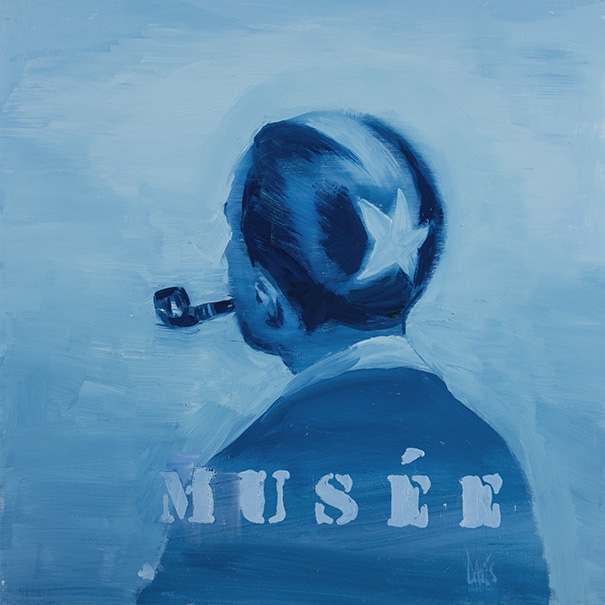
Marcel Duchamp 12 (Tonsure)
Original · Signed · Certificate
€920
Product Details
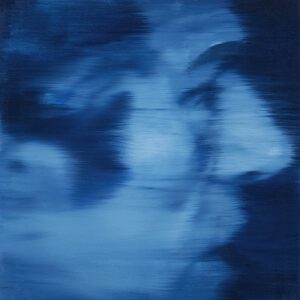
Davis Lisboa, Marcel Duchamp 12 (Tonsure), 2017. Oil on canvas, 60 × 60 × 3.5 cm (23.6 × 23.6 × 1.38 in).
This work takes as its point of departure Tonsure, Marcel Duchamp (1921), the photograph attributed to Man Ray in which the back of Duchamp’s head is marked by a star-shaped shaving. The gesture operates here as both image and sign—at once intimate and constructed—evoking withdrawal, transformation, and the coded presence of Rrose Sélavy.
The work begins with an approach informed by strategies associated with photo-based painting, initially aligned with Gerhard Richter. As the process unfolds, however, this reference recedes to the point of near disappearance. The image ultimately asserts its own pictorial logic, moving beyond direct influence and consolidating an autonomous presence.
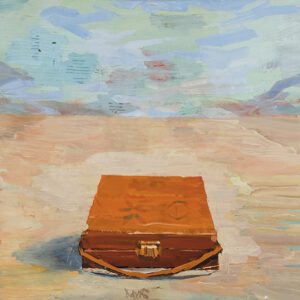
Situated within The Paintings Section From Davis Museum, the work extends a lineage of artist-led institutional forms. It resonates with Duchamp’s Boîte-en-valise, Robert Filliou’s Galerie légitime, and Marcel Broodthaers’s Musée d’Art Moderne, Département des Aigles, where the museum operates simultaneously as structure and proposition.
Executed in oil on canvas, the square format and the use of institutional blue reinforce the architectural and symbolic framework that defines the Davis Museum. The painting functions both as image and as a fragment within a larger system, where authorship, display, and narrative remain in continuous negotiation.
Additional information
| Weight | 3.3 kg |
|---|---|
| Dimensions | 50 × 50 × 3.5 cm |