
About the Artist
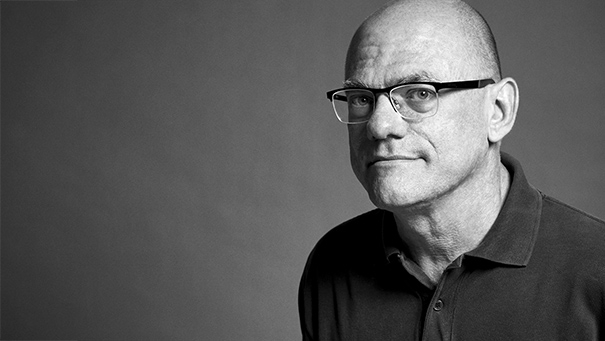
Davis Lisboa is a Spanish-Brazilian contemporary artist born in São Paulo, Brazil, in 1965, and based in Barcelona since 1986. His practice encompasses painting, illustration, and storyboarding.
He studied at Escola Massana and the Faculty of Fine Arts at the University of Barcelona. His paintings explore art history, institutional critique, and artist-created museums, with particular attention to Marcel Duchamp, Robert Filliou, and Marcel Broodthaers.
In 2009, he founded Davis Museum Barcelona, an artist-created contemporary art mini-museum.
The Paintings Section from Davis Museum Barcelona
The Paintings Section from the Davis Museum Barcelona constitutes the central axis of Davis Lisboa’s practice, conceived not as a discrete series of works but as a structured pictorial system embedded within an expanded museological framework. Painting here operates in conjunction with archive, document, and institution, forming a coherent and self-reflexive corpus.
Emerging from a sustained engagement with artist-led museum models, the project aligns itself with a lineage that includes the Museum of American Art in Berlin (MoAA), particularly in its ambition to construct a pictorial archive capable of registering cultural and historical transfer. Lisboa’s approach, however, shifts the emphasis from historiographic reconstruction to the critical staging of the museum as both subject and medium.
Formally, the works enter into a precise dialogue with Gerhard Richter’s procedures of photographic translation, projection, and painterly dissolution. Yet this engagement exceeds citation. The photographic image becomes an operative device through which painting is reconfigured as a site of temporal dislocation—where memory, mediation, and interpretation converge.
At the core of the section lies a specific art-historical narrative: that of artists who produced their own institutional frameworks. Figures such as Marcel Duchamp with his Boîte-en-valise, Robert Filliou with his Galerie Légitime, and Marcel Broodthaers with his Musée d’Art Moderne, Département des Aigles, are not merely referenced but structurally embedded within the conceptual architecture of the project. Each painting functions simultaneously as a representation and as a museological fragment—at once an image, a document, and an institutional extension.
This body of work is integrated into the Davis Museum Barcelona, a project materialized within a ballot box and disseminated through digital networks. Positioned between object, archive, and institutional critique, the museum operates as a readymade structure, a decentralized collection, and is officially recognized as a cultural entity by the Generalitat de Catalunya.
The inclusion of these works in the archive of Bridgeman Images extends their circulation beyond the physical object, situating them within a global system of image distribution and licensing. In this context, the paintings acquire a dual status: singular works and reproducible visual documents.
The section is organized into eight categories—Animals, Self-Portraits, Exteriors, Interiors, Classical Mythology, Still Lives, Historical Paintings, and Portraits—establishing not only a taxonomic order but also a conceptual framework through which the collection is read as a unified visual archive.
Lisboa’s commitment to oil on linen reflects both a technical and historical position. The medium is engaged not as a neutral support but as a dense field of references, carrying forward the material and conceptual weight of Western painting. This is reinforced by the exclusive use of Old Holland pigments, underscoring a deliberate investment in durability and precision.
The predominance of the square format corresponds directly to the cubic logic of the museum itself, producing a formal equivalence between pictorial surface and institutional container.
Chromatically, the production unfolds across three distinct phases: the Grey Period (2011–2016), the Blue Period (2016–2018), and the Full-Color Period (2019–present). These are not merely stylistic shifts but structural recalibrations within the broader system of the work.
Taken together, the Paintings Section articulates a position in which painting is no longer confined to representation but operates as a critical apparatus—simultaneously producing images and interrogating the conditions of their display, circulation, and institutional framing.
I am Davis Lisboa (São Paulo, Brazil, 1965), a Spanish-Brazilian visual artist based in Barcelona since 1986. My practice focuses on contemporary figurative painting and on the relationships between painting, art history, the museum, the archive, collecting, and institutional structures.
As a painter, I am represented online by Saatchi Art (Santa Monica, California, United States) and in person by DCS Contemporary (Karlsruhe, Germany), as well as through Davis Gallery Barcelona, my independent online art gallery. My paintings are also part of the international archive of Bridgeman Images (London, United Kingdom).
I am also the creator of the Davis Museum Barcelona, an independent museological project conceived as an autonomous micro-exhibition space and readymade sculpture. The museum has been exhibited at the Arnolfini art centre (Bristol, United Kingdom), and is listed in both the Agenda Cultural and the Portal de Col·leccions del Patrimoni Cultural de Catalunya.
Artistic Practice
Lisboa’s figurative work investigates art history from a meta-museological perspective, articulating an iconography centered on artists who founded their own museums. The resulting body of work functions as a visual archive that examines mechanisms of artistic institutionalization through portraiture, still life, historical reference, and painting.
His artistic and curatorial practice is closely connected to the Davis Museum Barcelona, a miniature conceptual collection that challenges museographic conventions through scale and self-institutional inscription, articulating archive, museological fiction, and readymade sculpture as forms of institutional critique.
Academic Education
- 1996–2008 · Degree in Painting, Faculty of Fine Arts, University of Barcelona.
- 1987–1990 · Advanced Studies in Painting, Escola Massana, Barcelona.
- 1978–1982 · Technician in Communication Drawing, ETEC Carlos de Campos, São Paulo.
Selected Recognition
- 2025 · Inclusion in Bridgeman Images: Davis Lisboa’s paintings are part of the international archive as PREMIUM assets for global museographic, editorial, and educational licensing.
- 2023 · The work Musée d’Art Moderne 11 (André Cadere) was selected as the cover of Grimus, written by Salman Rushdie and published by Éditions Gallimard, Paris, France.
- 2021 · Represented by DCS Contemporary, Karlsruhe, Germany.
- 2009 · Creation of the Davis Museum Barcelona.
Solo Exhibitions
- 2020 · Sister Museum, Istanbul Contemporary Art Museum, curated by Genco Gülan, Istanbul, Turkey.
- 2019 · La Secció de les Pintures del Davis Museum, Casa del Llibre, Barcelona, Spain.
- 2017 · Galerie Légitime 2.0, curated by Manuel Minch, Internet Moon Gallery, Barcelona, Spain.
- 2015 · Should museums celebrate elections?, curated by Francesca Brusa and Costanza Sartoris, Archive Box Museum, Zurich, Switzerland.
- 2011 · The Aesthetic of Charge, MKAC, Museo Karura Art Centre, virtual environment Second Life.
- 2009 · Hybrid-visiolibri, La Cova de les Cultures, Barcelona, Spain.
- 2009 · Hybrid-farrago, Sala de Arte Alteroutlet, Barcelona, Spain.
- 2009 · Davis Museum: Exhibition of the Permanent Collection of Contemporary Art, MKAC, Museo Karura Art Centre, virtual environment Second Life.
- 2009 · Què hem de fer amb l’art dels nou vinguts?, Centre Cívic Josep M. Trias i Peitx, Barcelona, Spain.
- 2007 · BMW by Davis, BMW Ibérica, Madrid, Spain.
- 2007 · BMW by Davis, BMW Cano Catalunya, Sant Cugat, Spain.
- 2007 · BMW by Davis, performance and exhibition, BMW Cano Catalunya, Barcelona, Spain.
- 2006 · Locus quod Filiolus, Galería San Vicente 31, Seville, Spain.
- 2006 · Locus quod Filiolus, Sala d’Exposicions, Faculty of Fine Arts, University of Barcelona, Spain.
- 2003 · 12 Autoretrats, Sala d’Exposicions, Faculty of Fine Arts, University of Barcelona, Spain.
- 1984 · Firasse, Galeria Art Brut, São Paulo, Brazil.
Group Exhibitions
- 2026 · The Aesthetic Transition. Spain 1960–2020. Fundación Juan March, Madrid, Spain. Participation with Ohh, Self-portrait, [M]UMoCA collection, Tomás Ruiz-Rivas.
- 2025 · Counterprints: Eco Artists Facing the Environmental Crisis, with Graham Bell Tornado and Chiara Sgaramella, curated by Eugenia Rojo, La Nau Cultural Center, University of Valencia, Valencia, Spain.
- 2024 · [M]UMoCA Exhibition, by Tomás Ruiz-Rivas, Red Itiner, Centro Cultural El Cerro, Moraleja de Enmedio, Spain.
- 2024 · [M]UMoCA Exhibition, by Tomás Ruiz-Rivas, Red Itiner, Sala Martín Chirino, San Sebastián de los Reyes, Spain.
- 2024 · [M]UMoCA Exhibition, by Tomás Ruiz-Rivas, Red Itiner, Centro Cultural Margarita Nelken, Coslada, Spain.
- 2024 · [M]UMoCA Exhibition, by Tomás Ruiz-Rivas, Red Itiner, Centro Cultural Padre Vallet, Pozuelo de Alarcón, Spain.
- 2024 · [M]UMoCA Exhibition, by Tomás Ruiz-Rivas, Red Itiner, Al Artis Exhibition Hall, Valdeolmos-Alalpardo, Spain.
- 2024 · [M]UMoCA Exhibition, by Tomás Ruiz-Rivas, Red Itiner, Federico García Lorca Socio-Cultural Center, Humanes de Madrid, Spain.
- 2024 · [M]UMoCA Exhibition, by Tomás Ruiz-Rivas, Red Itiner, Adolfo Suárez Exhibition Hall, Velilla de San Antonio, Spain.
- 2024 · [M]UMoCA Exhibition, by Tomás Ruiz-Rivas, Red Itiner, Federico García Lorca Cultural Center, Rivas-Vaciamadrid, Spain.
- 2023 · [M]UMoCA Exhibition, by Tomás Ruiz-Rivas, curated by Fernando Baena, Cruce Contemporáneo, Madrid, Spain.
- 2023 · Archivos Atómicos, Harddiskmuseum by Solimán López, El Parqueadero, Museo de Arte Miguel Urrutia (MAMU), Bogotá, Colombia.
- 2023 · [M]UMoCA at the 2023 Night of Museums, [M]UMoCA (curated by Tomás Ruiz-Rivas), MACBA – Museu d’Art Contemporani de Barcelona, Barcelona, Spain.
- 2022 · Metopia Pavilion, The Wrong Biennale 5, curated by Luciana de Paula Santos.
- 2020 · Mirades des del confinament, curated by Joan Fontcuberta, Cruïlla Festival / Òmnium Cultural, Igualada, Spain.
- 2020 · The Temple of Man, Marcel Duchamp Roast, RIA Live Cinema, Beyond Baroque, Venice, California, USA.
- 2020 · California FluxFest 2020: Vision 20-20, Building Bridges Art Exchange, Santa Monica, California, USA.
- 2019 · A Book About Death, Islip Art Museum, East Islip, New York, USA.
- 2019 · NeoLatinísiiimo Art Biennial, City Lights Gallery, Bridgeport, Connecticut, USA.
- 2019 · FluxFest 2019: Big Ideas in Small Art, Sheldon Rose Gallery, Toronto, Canada.
- 2019 · FluxFest 2019: Pride Mail Project Art Exhibition and Performances, Sheldon Rose Gallery, Toronto, Canada.
- 2017 · Aquí y Ahora, “Power, Corruptions and Lies” (6th edition), Galería Blanca Soto Arte, Madrid, Spain.
- 2017 · Espacio f (mail art), CentroCentro, Madrid, Spain.
- 2017 · For Real, participation in the MicroCollection, ArtHelix Art Gallery, New York, USA.
- 2016 · Dendrogram Tree-Kit, Davis Museum / Laboratori Social Metropolità, curated by Anna Recasens, La Nau Sud, NauEstruch, Sabadell, Spain.
- 2016 · Galeria Transparente: Showroom, curated by Frederico Dalton, Galeria do 2º Andar, Centro Cultural Justiça Federal, Rio de Janeiro, Brazil.
- 2014 · Eleven: The John Erickson Museum of Art (JEMA) 10 Year Retrospective, curated by Sean Miller, Harn Museum of Art, Gainesville, Florida, USA.
- 2014 · Encapsulados (Wunderkammer), curated by Juan Cuéllar Costa, Casa Sotoa, Málaga, Spain.
- 2014 · Eleven: The John Erickson Museum of Art (JEMA) 10 Year Retrospective, curated by Sean Miller, Bob Rauschenberg Gallery, Fort Myers, Florida, USA.
- 2013 · Incubarte, International Art Festival, Centre del Carme Cultura Contemporània, Valencia, Spain.
- 2013 · The Wrong: New Digital Art Biennale, Homeostasis Lab Pavilion, São Paulo, Brazil.
- 2013 · Remix: 10 years in the mix, Davis Museum and Danger Museum, Spor Klübü / Kolonie Wedding, Berlin, Germany.
- 2013 · Small, Unusual and Specialist Museums Survey, curated by Sacha Waldron, CRATE Studio and Project Space, Margate, England.
- 2013 · Fast Film “Here and Gone in 60 Seconds”, LACDA – Los Angeles Center for Digital Art, Los Angeles, USA.
- 2012 · Hileia/Antropoantro, Museu de Arte Contemporânea de Campinas (MACC), Campinas, Brazil.
- 2011 · Museum Show, curated by Nav Haq, Arnolfini, Bristol’s International Centre for Contemporary Arts, Bristol, England.
- 2011 · Até Meio Quilo, Grupo Aluga-se, Casa de Cultura da Universidade Estadual de Londrina, Londrina, Brazil.
- 2011 · Até Meio Quilo, Grupo Aluga-se, Fundação Cultural Badesc, Florianópolis, Brazil.
- 2011 · Hiléia no Ateliê, Sílvia Matos Ateliê de Criatividade, Campinas, Brazil.
- 2011 · Z-Axis Works, Toy Art Exhibition, Sho Bcn, Barcelona, Spain.
- 2011 · TroyArt International, MuBE – Museu Brasileiro da Escultura e Ecologia, São Paulo, Brazil.
- 2010 · A Book About Death, SAL Art Gallery, Long Island University, New York, USA.
- 2010 · HomeMade: A Group Video Show, curated by Stéphani Hab and Irene Pomar, Davis Museum, Barcelona, Spain.
- 2010 · A Book About Death, MOMA Wales – Museum of Modern Art, Machynlleth, Wales.
- 2010 · A Book About Death, MuBE – Museu Brasileiro da Escultura e Ecologia, São Paulo, Brazil.
- 2009 · Els Colors del Foc, Centre Cívic Parc Sandaru, Barcelona, Spain.
- 2009 · XXI Equus Catalonia, Galería Artnobel, Barcelona, Spain.
- 2009 · Digital Art Expo International, LACDA – Los Angeles Center for Digital Art, Los Angeles, USA.
- 2009 · Moda Ilustrada, Galeria Olido, São Paulo, Brazil.
- 2009 · Barris Creatius: Energia Barcelona, Ajuntament de Barcelona, Barcelona, Spain.
- 2009 · Sketch It Out!, APW Gallery, New York, USA.
- 2009 · Mi Torito Pucará, Galeria Artevistas, Albi and Toulouse, France.
- 2008 · FAIM 2008 – Independent Art Fair of Madrid, Madrid, Spain.
- 2008 · Asperger: Magazine Interior, CASM – Centre d’Art Santa Mònica, Barcelona, Spain.
- 2008 · Muzeum Światowej Ilustracji, Biblioteca Głowiński, Oleśnica, Poland.
- 2008 · Mi Torito Pucará, Galería Artevistas, Barcelona, Spain.
- 2008 · Sentidos, Galeria Cristina Costa, Famalicão, Portugal.
- 2008 · Sketchbooks!, Galeria Pop, São Paulo, Brazil.
- 2008 · Galería Artevistas, Barcelona, Spain.
- 2007 · Night of 1,000 Drawings, Artists Space, New York, USA.
- 2007 · VI Biennale Internazionale dell’Arte Contemporanea di Firenze, Florence, Italy.
- 2007 · Solum, Museu de Arte do Parlamento de São Paulo, São Paulo, Brazil.
- 2007 · Galeria Paspartú, Barcelona, Spain.
- 2006 · espai [b], galeria d’art contemporani, Barcelona, Spain.
- 2006 · MARB ART, II International Contemporary Art Exhibition in Marbella, Marbella, Spain.
- 2006 · Galeria Paspartú, Barcelona, Spain.
- 2005 · Miedzynarodowy Projekt, Art for Chelmek, Galerii Epicentrum (MOKSiR), Chełmek, Poland.
- 2005 · Puro Arte Art Fair, Vigo, Spain.
- 2005 · Holland Art Fair, The Hague, Netherlands.
- 2005 · Galería Gaudí, Madrid, Spain.
- 1989 · Sala Jaume Busquet, Escola Massana, Centre d’Art i Disseny, Barcelona, Spain.
- 1988 · Wonder, Sala Jaume Busquet, Escola Massana, Centre d’Art i Disseny, Barcelona, Spain.
- 1984 · Galeria Art Brut, São Paulo, Brazil.
- 1984 · Associação de Artistas Plásticos da Colagem, São Paulo, Brazil.
Conferences and Performances
- 2019 · La Secció de les Pintures del Davis Museum, Casa del Llibre, Barcelona, Spain.
- 2013 · Quotes Section from Davis Museum (Unusual Conference), VI Incubarte, International Art Festival; venues: Centre del Carme Cultura Contemporània, Valencia; Museu de Belles Arts de Castelló, Castelló; and Museo de Arte Contemporáneo de Alicante – MACA, Alicante, Spain.
- 2013 · Quotes Section from Davis Museum (Unusual Conference), CRATE Studio and Project Space, Margate, England.
- 2009 · Museo Karura Art Centre (MKAC), Second Life.