Davis Museum 1
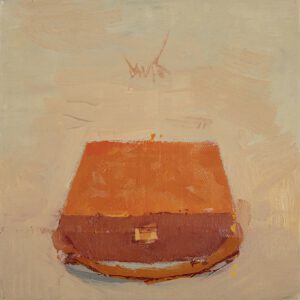
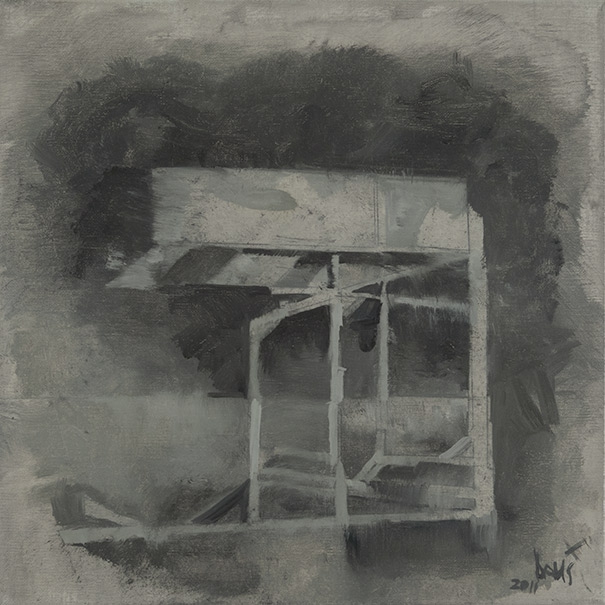
This painting reinterprets a photograph of the ballot box at Davis Museum Barcelona, digitally simplifying its geometry into a precarious architectural form that evokes both Brazilian favelas and the eroded surfaces associated with Anselm Kiefer.
Executed in greys and blacks, the square composition refers to the museum’s cubic logic. As part of “The Paintings Section from Davis Museum Barcelona”, it functions as a self-reflexive museological image within the tradition of artists who have founded their own museums.
700 $
Product Details
This painting is inspired by a photograph of the urn at the Davis Museum Barcelona, subsequently digitally altered to reconfigure and simplify its geometry into a structure that appears partially disarticulated. The transformation evokes the precarious architecture of Brazilian favelas while entering into dialogue with the dark, eroded surfaces of Anselm Kiefer. The work thus articulates a reflection on memory, fragility, and the museum understood simultaneously as a site of shelter and structural vulnerability.
Executed in oil on linen with Old Holland pigments, the painting unfolds within an almost monochromatic range of greys and blacks. The architectural form is concentrated at the center, defined by rectilinear planes and vertical supports that are only lightly delineated, while expansive dark zones surround and press upon the structure. The brushwork is visible and direct, with softened transitions that generate a dense atmosphere; the contrast between lighter areas and shadowed masses intensifies the sensation of instability and suspended space. The square format reinforces the reference to the museum’s cubic logic and its self-referential dimension.
As part of “The Paintings Section from Davis Museum Barcelona,” the work functions as a museological self-portrait within a fictional yet institutionally recognized framework. In dialogue with Duchamp, Filliou, and Broodthaers, it reinterprets the notion of the portable museum as a structure exposed to historical erosion, extending the project’s investigation into archive, ruin, and post-conceptual painting.
Additional information
| Weight | 2 kg |
|---|---|
| Dimensions | 3 × 30 × 30 cm |